Air Duct Sanitizing & Mold Remediation in Los Angeles
Cleaning removes the dust. Sanitizing deals with what’s living in it.
If your Los Angeles home has ever smelled musty when the AC kicks on — or if someone in the house sneezes more indoors than out — the problem may go deeper than ordinary dust. In LA’s coastal humidity, mold and bacteria can take hold inside ductwork, and a standard cleaning alone doesn’t always finish the job. That’s where professional air duct sanitizing comes in.
At LO Duct Cleaning, we offer full duct sanitizing and mold remediation as part of our air duct cleaning services. Our trained technicians clean the entire system first, then treat it — so you’re not just moving contaminants around, you’re eliminating them at the source.
What Is Air Duct Sanitizing?
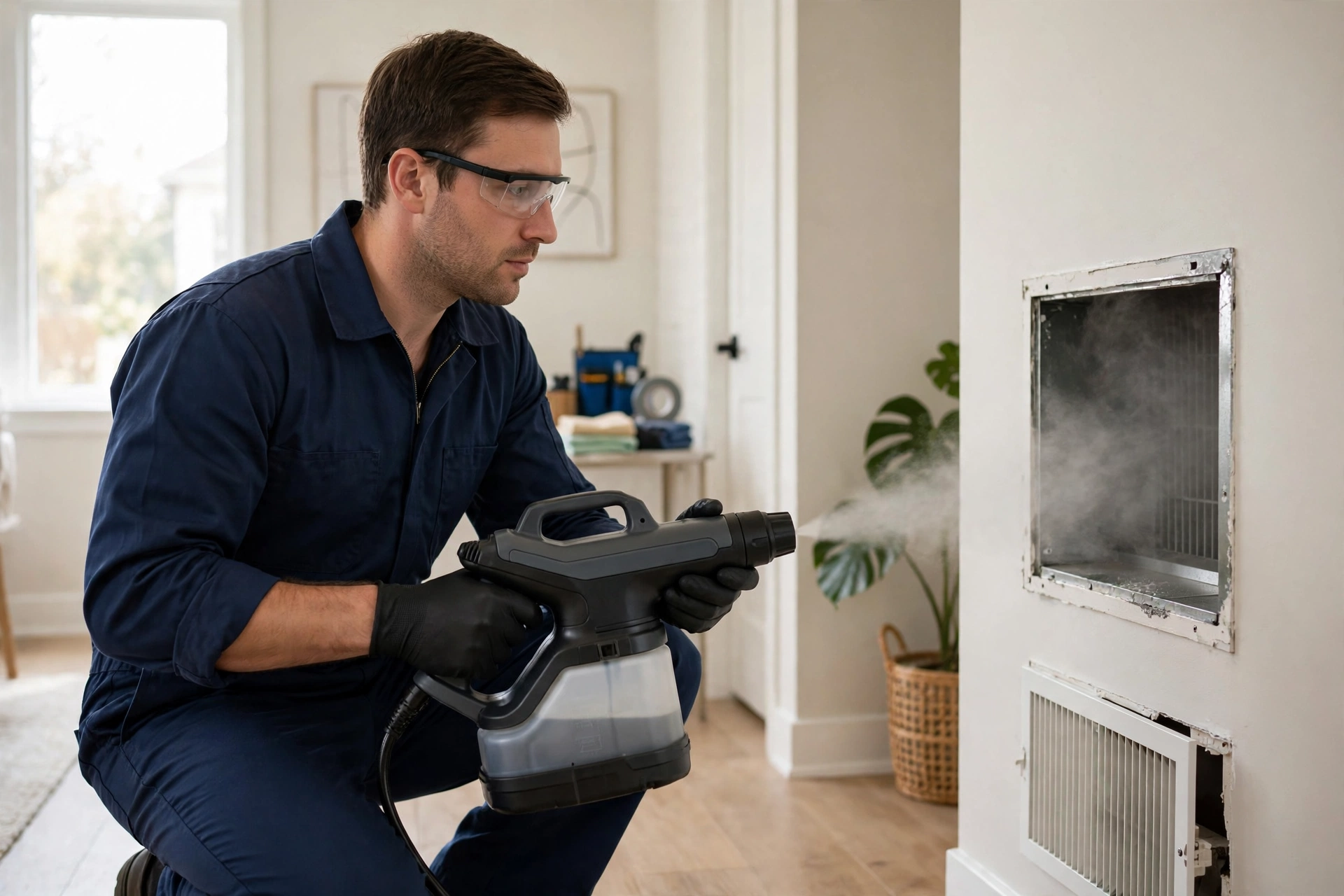
Standard duct cleaning physically removes accumulated dust, debris, pet hair, and lint from your supply lines, return ducts, registers, and connected HVAC components. Sanitizing is the next step: after the system is clean, we apply an EPA-registered sanitizing treatment to the interior surfaces of the ductwork to neutralize remaining mold, bacteria, and odor-causing microbes.
Think of it this way — cleaning is the scrub, sanitizing is the disinfect. For most homes, a thorough cleaning is enough. But when microbial growth is present or suspected, sanitizing makes the difference between a system that looks clean and one that truly is.
Why Mold Grows in Los Angeles Ductwork
LA isn’t the first place people associate with mold — but local conditions create more risk than most homeowners realize:
Coastal Humidity and the Marine Layer
Homes from Santa Monica to Long Beach sit in moist ocean air. When that humidity meets the cold surfaces of an air-conditioned duct system, condensation forms — and moisture plus dust is everything mold needs to grow.
Condensation on AC Coils and Drain Pans
A clogged condensate drain or a coil running cold in a humid attic creates standing moisture right where air flows through.
Wildfire Ash as a Food Source
After fire season, fine ash settles into duct systems across the LA basin. That organic layer gives mold spores something to feed on once moisture arrives.
Older Housing Stock
Much of Los Angeles was built decades before modern moisture management. Aging ductwork with small leaks pulls humid attic or crawlspace air straight into the system.
Infrequent Use Cycles
During mild LA winters, systems sit idle for weeks — stagnant, dark, sometimes damp ductwork is an ideal incubator.
Signs You May Have Mold in Your Ducts
You don’t need to see mold to have a problem — most growth hides deep inside the system. Watch for these warning signs:
Musty or Stale Odor
A musty or stale odor when the HVAC system runs, especially after it’s been off for a while.
Visible Dark Spots
Visible dark spots or discoloration around vent covers and registers.
Allergy Symptoms Worse at Home
Allergy-like symptoms that get worse at home and ease when you leave.
History of Leaks or Flooding
A history of roof leaks, plumbing leaks, or flooding near ductwork.
Excess Condensation
Excess condensation on vents or duct surfaces.
Never Been Checked
It simply hasn’t been checked in years and conditions above apply.
If several of these sound familiar, it’s worth having the system professionally inspected before assuming a standard cleaning will solve it.
Our Sanitizing & Remediation Process
We never sell sanitizing blindly. Every job starts with an honest inspection — and if your system doesn’t need it, we’ll tell you so.
1. Inspect
A technician examines your ductwork, vents, coils, and drain pans, documenting any visible growth or moisture issues with photos.
2. Clean the Full System
Using truck-mounted vacuum equipment — not portable units — we remove dust, debris, and loose contamination from the entire duct network, including supply lines, returns, grilles, and registers.
3. Address the Source
Mold keeps coming back if the moisture stays. We’ll point out contributing issues (a clogged condensate drain, duct leaks pulling in humid air) and recommend fixes. For related moisture protection, see our insulation services and attic cleaning options.
4. Apply Sanitizing Treatment
With the system clean and dry, we fog the duct interiors with an EPA-registered sanitizer designed for HVAC systems, reaching surfaces brushes and vacuums can’t.
5. Verify
We walk through the completed work with you, show before-and-after photos, and confirm the system is clean, dry, and treated.
A Note on Health — Honest, Not Hype
You’ll see some companies make dramatic medical claims about mold. We won’t. Here’s what can be said responsibly: mold and bacteria in ductwork can aggravate allergies and irritate airways, especially for children, older adults, and anyone with asthma or respiratory sensitivities. Removing the source and sanitizing the system reduces the microbial load circulating through your home.
If anyone in your household has persistent respiratory symptoms, talk to your doctor — and let us handle the ducts. If you’re also concerned about what you’re breathing day to day, pairing a sanitizing service with upgraded filtration (see our HEPA filter installation) is one of the most effective combinations we offer.
Why Professional Beats DIY
Hardware-store sprays and foggers promise easy mold fixes, but they have real limits:
- They can’t reach the problem. Consumer products treat the first few feet of a vent. Professional equipment reaches the full run of ductwork where growth actually lives — and our process keeps contamination contained so spores don’t spread through the house during service.
- Killing without removing isn’t enough. Dead mold still contains allergens. The physical removal step — full-system cleaning with truck-mounted equipment — has to come first, followed by treatment.
- The moisture source stays. A spray doesn’t fix a leaking duct or a clogged drain pan. Without addressing the cause, growth returns within months — which is why our process includes identifying the source, not just treating the symptom.
Sanitizing vs. Standard Cleaning — Which Do You Need?
For routine maintenance and dust buildup, a standard air duct cleaning is the right call. Add sanitizing when there’s a musty odor, visible growth, a history of leaks or flooding, or allergy concerns that an inspection suggests are microbial. Not sure which applies to your home? That’s exactly what our inspection is for — and our promise stands: we’ll recommend only what your system actually needs, even if that means a smaller job.
Ready for Cleaner Air? Schedule Your Free Estimate Today
Related services: Air Duct Cleaning · Dryer Vent Cleaning · HEPA Filter Installation · Service Areas